

Want to explore BaZi more deeply? Visit our complete BaZi guide for a comprehensive introduction.
BaZi vs Western astrology compares two systems: BaZi builds from Four Pillars and Five Elements by birth data, while Western astrology centers on planetary positions and signs — different maps for temperament and timing tendencies. The free chart preview is a pillar entry point: four pillars with birth time, three without. It does not include Ten Gods, luck cycles, or Daily. Orient with Get My Free Chart Preview, then use this page for the key differences.
The Foundation: Stars vs. Elements
The most fundamental difference comes down to what each system is measuring.
Western astrology is based on the positions of planets, the sun, and the moon relative to the twelve constellations of the zodiac at the moment you were born. It's a sky-based system — literally mapping where celestial bodies were in space.

BaZi is based on the Chinese calendar — a sophisticated system that encodes the interaction of the Five Elements (Wood, Fire, Earth, Metal, Water) and Yin/Yang energy through Heavenly Stems and Earthly Branches. It's an earth-and-time-based system — mapping the energy flowing through the moment you arrived.
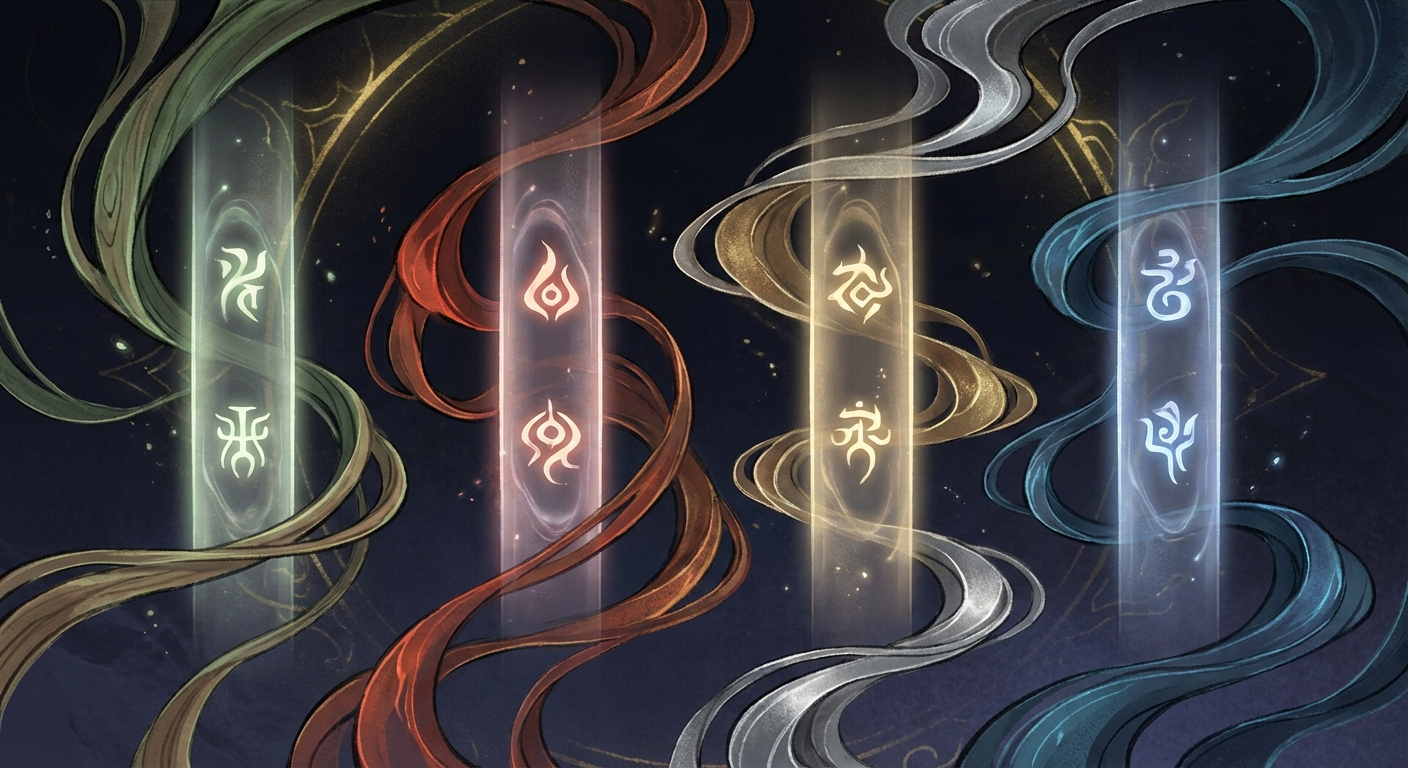
Think of it this way: Western astrology looks up at the sky. BaZi looks at the energy within.
Personality: 12 Signs vs. 10 Day Masters
In Western astrology, your sun sign is your primary identity marker. There are 12 options — Aries through Pisces — and everyone born in the same ~30-day window shares the same sign.
In BaZi, your primary identity comes from your Day Master — the Heavenly Stem of your Day Pillar. There are 10 Day Masters (five elements × Yin/Yang), and they change every day, not every month. This already creates far more differentiation.
But here's the real kicker: in BaZi, the Day Master is just the starting point. Your full chart includes four pillars (year, month, day, hour), each with two characters, creating a unique combination of eight characters. The possible combinations run into hundreds of thousands — which is why two people born on the same day can have very different charts if they were born at different hours.
Western astrology also gets more nuanced with your full birth chart (moon sign, rising sign, planetary houses), but the popular understanding usually stops at the sun sign.
Timing: Transits vs. Luck Cycles
Both systems address the question of timing — when will good or challenging periods occur in your life?
Western astrology uses planetary transits — the current positions of planets relative to your birth chart. Saturn return, Mercury retrograde, Jupiter in your 7th house — these are real-time cosmic events that astrologers interpret.
BaZi uses a pre-calculated system of 10-year Luck Cycles (大运) and annual influences. Your entire life is mapped out in advance — decade by decade — showing which elemental energies will dominate each period. This makes BaZi exceptionally practical for long-term planning.
The key difference: Western timing is reactive ("What's happening in the sky now?"), while BaZi timing is predictive ("What energy will define my 30s vs. my 40s?").
Practical Use: Descriptive vs. Prescriptive
This is perhaps the biggest philosophical difference.
Western astrology is primarily descriptive. It tells you what you're like: "You're a Virgo — detail-oriented, analytical, a perfectionist." It's excellent for self-reflection and understanding relationship dynamics.
BaZi is prescriptive. It not only describes who you are but tells you what to do about it: "Your chart is weak in Water — this year, Water energy is strong, making it an excellent time for career moves." It's a decision-making framework.
In Chinese culture, BaZi isn't a parlor game — it's a serious planning tool. Business leaders use it to time product launches. Families consult it before arranging marriages. Real estate decisions, career changes, even the timing of medical procedures can be guided by BaZi analysis.
Compatibility: Sun Signs vs. Elemental Dynamics
Western compatibility is often reduced to "Are our signs compatible?" — Fire signs with Air signs, Earth with Water, etc. It's fun and sometimes surprisingly accurate, but it's working with broad strokes.
BaZi compatibility analyzes how your specific elemental energies interact with another person's. It examines whether your elements generate, control, or clash with each other across all four pillars. The result is a much more detailed picture of where harmony and friction will occur in a relationship.
BaZi can even identify the specific dimensions of compatibility — whether you're aligned financially, emotionally, or in terms of life goals — based on which pillars harmonize and which conflict.
Longitude: clock time and true solar time
When a birthplace is entered, true solar time adjusts the birth hour by birthplace longitude. Near an hour boundary, the hour pillar can differ from the clock-time chart. Without a birthplace, the chart keeps the clock time you entered.
Can You Use Both?
Absolutely. Many people who love Western astrology find that BaZi adds a completely new dimension to their self-understanding. The two systems don't contradict each other — they illuminate different aspects of the same person.
Western astrology might tell you that you're a Leo with a Scorpio moon — passionate but intense. BaZi might reveal that you're a Yang Fire Day Master with strong Water in your chart — confirming that same intensity but also showing you exactly when in your life that energy will peak and how to channel it.
Together, they create a richer, more complete picture of who you are.
The Quick Comparison
- Basis: Western = planetary positions | BaZi = Five Elements + Yin/Yang
- Identity: Western = 12 sun signs | BaZi = 10 Day Masters × 8-character charts
- Timing: Western = real-time transits | BaZi = pre-mapped 10-year Luck Cycles
- Style: Western = descriptive | BaZi = prescriptive
- Same birthday: Western = same sign | BaZi = different chart if different hour
- Hour: when a birthplace is entered, true solar time adjusts the birth hour by birthplace longitude
Ready to Explore Your BaZi Chart?
If you've only ever known your zodiac sign, you're seeing just one piece of the puzzle. Your BaZi chart reveals the other half — the elemental forces that shape your personality, timing, and destiny.
✨ Open the free chart preview. When a birthplace is entered, true solar time adjusts the birth hour by birthplace longitude.
👉 Get Your Free BaZi Chart at Eastern Fate
What to Read Next
- What Is BaZi? The Complete Guide to Chinese Astrology's Best-Kept Secret — Start from the beginning
- Your Day Master: The Most Important Thing in Your Birth Chart — Discover your BaZi core identity
- BaZi vs Zi Wei Dou Shu: Comparing Chinese Astrology Systems — Another comparison worth exploring
- Chinese Zodiac vs BaZi: What's the Real Difference? — Zodiac signs vs. full chart analysis